
When choosing materials like granite or quartz, it is important to embrace the natural "personality" of the stone. Because these materials often feature unique patterns and intricate veining, achieving a perfect "book-match" or seamless transition between pieces can be challenging. Even slabs from the same batch can vary significantly, meaning that patterns may not always align perfectly between worktops, wall panels, or upstands.
The impact on project planning your project quote is based on a specific number of slabs required for your layout. To illustrate how we manage these unique patterns, let’s look at a small kitchen design using iceramic Noir.
As shown in the image on the right, this material features a bold, directional vein. While we can often fit the three required pieces onto a single slab, the strong flow of the pattern means we must prioritize the best possible layout within those physical dimensions. By planning the fabrication carefully, we ensure your kitchen showcases the stone's natural beauty, even where exact vein matching isn't possible.
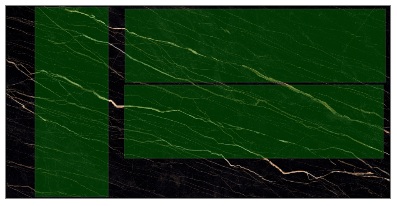
U-Shape kitchen layout
In this specific example, the coloor and vein matching have translated beautifully into the final layout. While the natural variation of the stone means that seams are rarely a 100% identical mirror image, the directional grain and flow of the pattern are perfectly synchronized across all surfaces. By utilizing a single slab effectively, we have achieved a cohesive look where the movement of the quartz flows consistently throughout the kitchen. This result demonstrates how a well-planned fabrication layout can maximize the aesthetic impact of a highly patterned material within a single-slab budget.
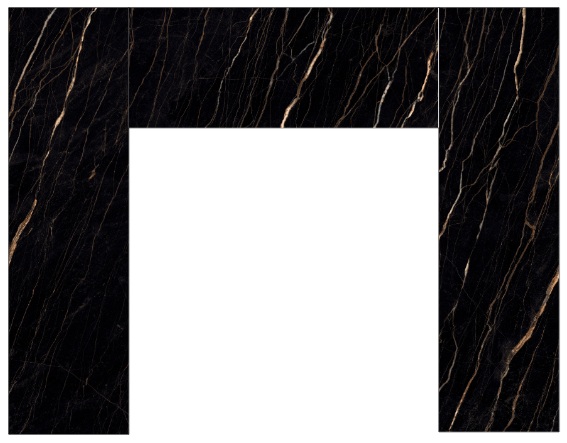
L-Shape kitchen layout
In this second scenario, we use the same pieces as Example 1, but with an alternative layout that emphasizes material yield over directional consistency. As illustrated, the veins and grain patterns do not run in a uniform direction across all surfaces.
To achieve perfectly synchronized flow throughout the kitchen, an additional slab would be required. Because raw material is often the most significant component of a project's total cost, adding a slab can substantially increase the final quote.
Furthermore, it is important to note that achieving 100% directional alignment is sometimes physically impossible due to the dimensions of the material. For instance, if a project requires three worktops at 3 meters long, but the matching grain for one piece must be pulled from the "height" of the slab, the layout is limited by the slab’s physical size. Most natural stone slabs reach a maximum height of 2 meters, while quartz is typically limited to 1.6 meters.
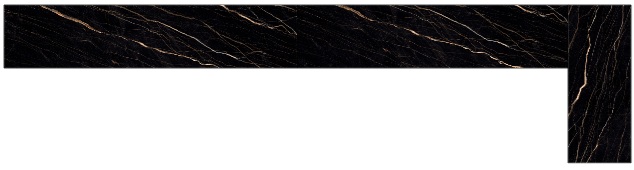
Ensuring consistency in colour shade and pattern alignment across worktop joints
It is important to note that pattern matching challenges are not limited to heavily veined or striking materials. Certain surfaces exhibit tonal shifts and varied markings throughout the slab; for instance, designs like mediteranean Silk feature distinct patches of lighter (1) and darker areas (2).
Depending on the layout and how the slab is cut, a darker section of the material may naturally meet a lighter section at a joint. While we always strive for the best possible aesthetic alignment through careful templating and cutting, a perfect match is not always achievable due to these natural or manufactured variations. When selecting a material with these characteristics, customers should be prepared for these visible transitions at the jointing points.

1
lighter
lighter
2
darker
darker
Examples to illustrate how different material types respond to jointing:
Patterned Materials: Although these pieces were cut from the same slab, the inherent tonal variations and movement in the design mean the joint is not a perfect visual match. This is a natural characteristic of more complex, veined materials.
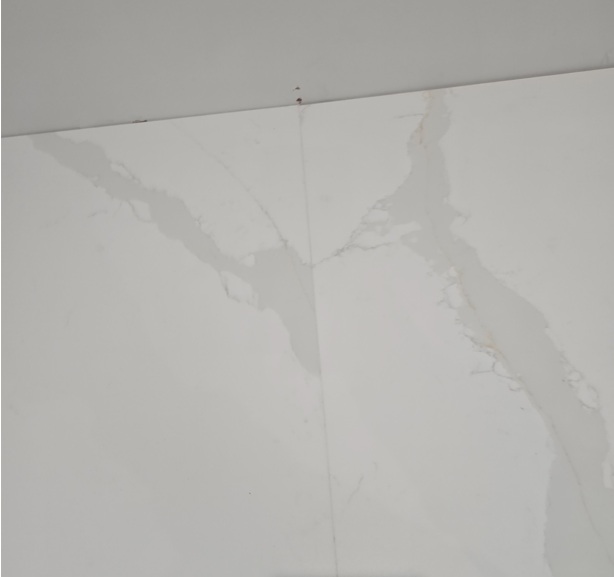
Uniform Materials: This image features White Mirror Quartz. When selecting a more uniform colour with a fine grain and repeating pattern, the colour consistency is far more predictable, resulting in a nearly seamless appearance at the joint.
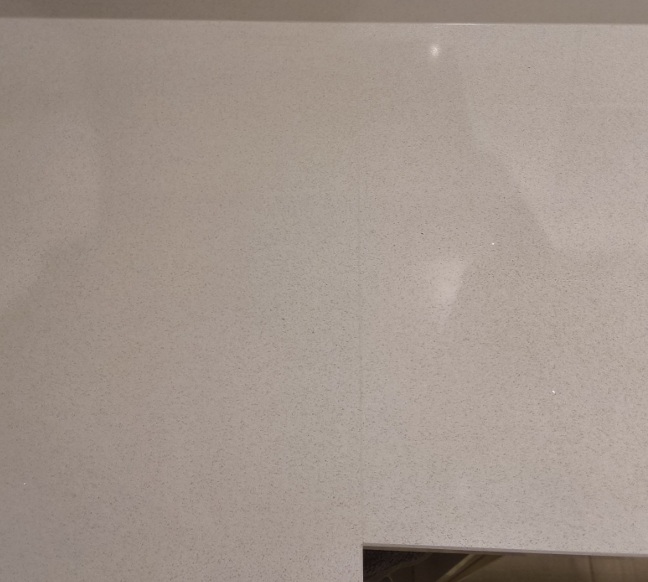
We always endeavour to achieve the best possible match for every installation. However, as demonstrated above, the specific characteristics of your chosen material will dictate the final result. If you have any concerns regarding how your selected colour will appear at the joints, please contact us for further guidance before your order is finalised.
Island End Panels and Waterfall Edges
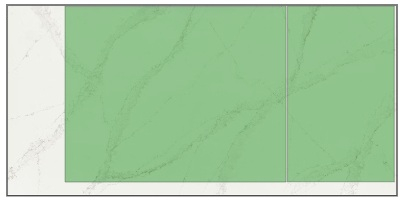
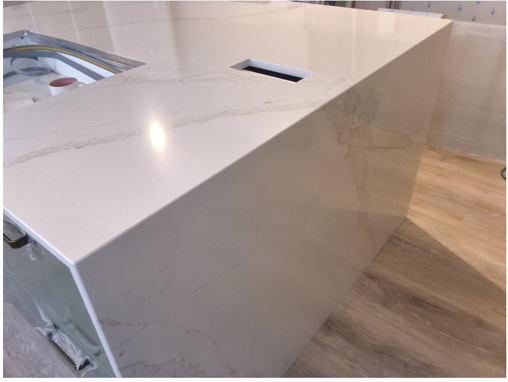
Achieving the Continuous Vein: The Waterfall Edge
To create a seamless Waterfall Edge, the island surface and the vertical end panel must be harvested from the same slab in immediate succession. As illustrated in the diagram, this precise cutting allows the natural veining of the stone to flow uninterrupted from the horizontal plane down the side of the unit.
Key Design Considerations:
Slab Length Constraints: This continuous "book-matched" flow is dependent on the total length of the slab. If an island exceeds the slab's dimensions, a natural break in the pattern is unavoidable.
Secondary End Panels: While one side can achieve a perfect vein match from a single slab, a second end panel usually requires a separate slab. Due to the unique nature of natural stone, the veining on a second panel will not align or match the primary flow exactly.
Wall cladding and wall panels
Precision in Wall Cladding and Splashbacks
Stone cladding can create the illusion of a single, massive slab, but achieving this requires meticulous planning and material selection.
Integrated Sectioning - It is possible to harvest individual sections from a single larger slab. This allows us to create, for example, a 3 part splashback with varying heights and widths yet the natural veining remains perfectly across the joints of the 3 parts.
The Limitations of Scale
Slab Length v Wall Span: When a wall's length exceeds the maximum span of a single slab, the material must be cut from different sections of the stone. While all pieces may originate from the same slab, the natural veining will not flow seamlessly across the vertical joints.
Horizontal to Vertical Transitions: It is standard industry practice for the vein not to continue from the horizontal worktop into the vertical splashback. Achieving a perfect match at every intersection is virtually impossible given the nature of raw stone.
Practical Installation & Jointing
While it is technically possible to manufacture oversized sections in a single piece, joints are often a deliberate choice for structural integrity and installation quality:
Handling & Fit: Large, unwieldy pieces are difficult for fitters to manoeuvre in confined spaces.
Site Protection: Using smaller, jointed sections allows for a tighter, more precise fit without risking damage to surrounding cabinetry, end panels, or wall surfaces during the installation process.
Economic Considerations vs. Aesthetic Continuity
The cost of your project is heavily influenced by material yield and waste management:
Yield Optimization: Our standard quoting process focuses on maximizing the utility of each slab. By minimizing offcuts and waste, we can keep the initial project cost as low as possible.
The Trade-off: To achieve this high yield, pieces that sit adjacent to one another in your kitchen may be cut from non-sequential areas of the slab. Consequently, the veining and patterns may not align at the joints.
Bespoke Matching: Unless otherwise specified, we prioritize material efficiency. However, if seamless vein-matching is a priority for your design, please let us know. Note that this typically requires additional slabs and results in higher material costs due to increased waste.
The Vision: Planning for Perfection
Achieving a flawless, high-end stone installation is as much about the planning phase as it is about the final polish. Because natural stone is a unique masterpiece of geology, no two slabs—or even two sections of the same slab—are identical.
The Importance of Early Consultation
To achieve your "dream" installation, the conversation about vein and pattern matching must begin at the very start of the design process. Waiting until the stone has been ordered or the template has been taken is often too late to adjust the material requirements.
• Setting Expectations: Clear communication allows us to understand exactly where you want the "hero" features of the stone to sit. Whether it’s a dramatic vein running through a central island or a subtle flow across a splashback, we need to know your priorities.
• Material Allocation: If your heart is set on a seamless flow across joints, we may need to source specific "book-matched" or "consecutive" slabs. These are slabs sliced from the block in sequence, allowing them to mirror each other like the pages of a book.
• Budget Alignment: Early planning ensures there are no surprises. If your vision requires additional material to achieve perfect continuity, we can factor that into the quote immediately, rather than as an unexpected cost later in the project.
Collaborative Design
We view every project as a partnership. During the early stages, we encourage you to:
1. Identify the Focal Point: Decide which area of the kitchen or bathroom should have the most striking pattern.
2. Discuss Joint Placement: Let us walk you through where the joints will naturally fall based on the slab size and your layout.
3. Review the Layout: Whenever possible, we involve our clients in the "nesting" process—visualizing how the digital templates will be placed onto the specific slabs before a single cut is made.
Achieving the "Perfect" Installation
The difference between a standard installation and a spectacular one lies in the details. By discussing your requirements early, we can harmonize the raw beauty of the stone with the technical constraints of your space.
The difference between a standard installation and a spectacular one lies in the details. By discussing your requirements early, we can harmonize the raw beauty of the stone with the technical constraints of your space.